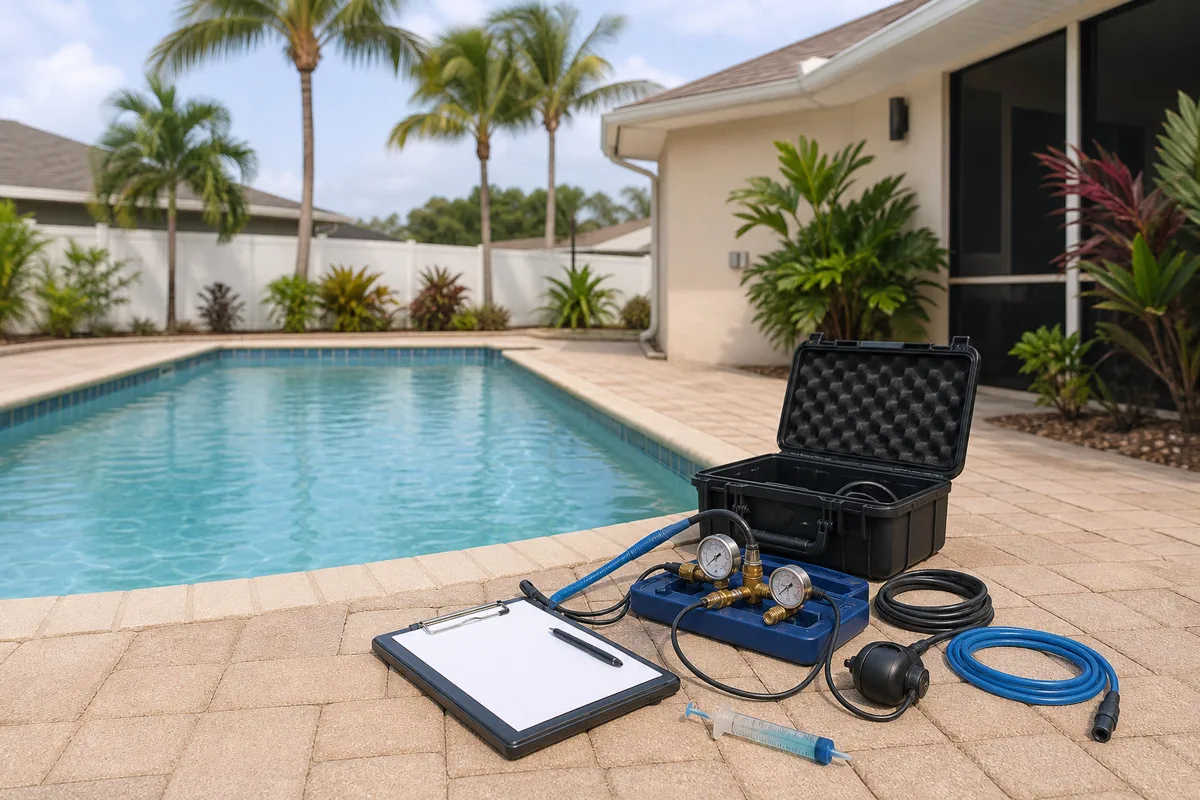
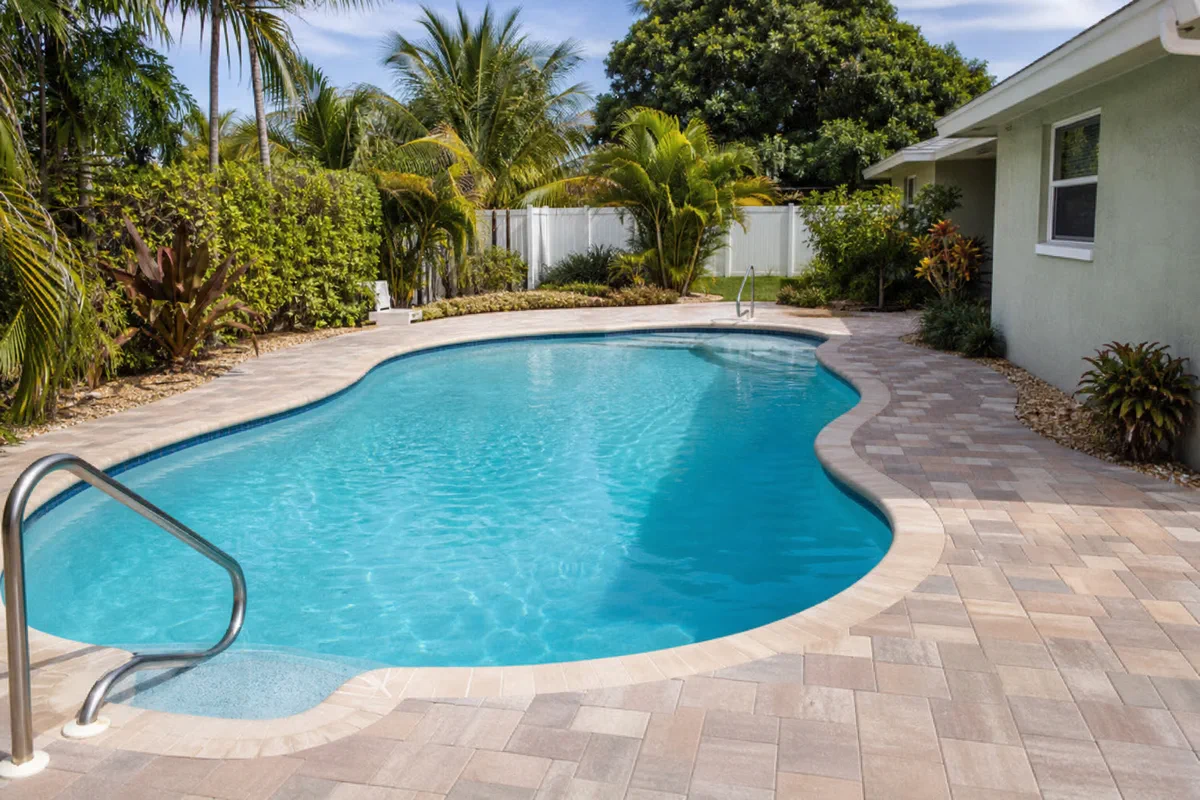
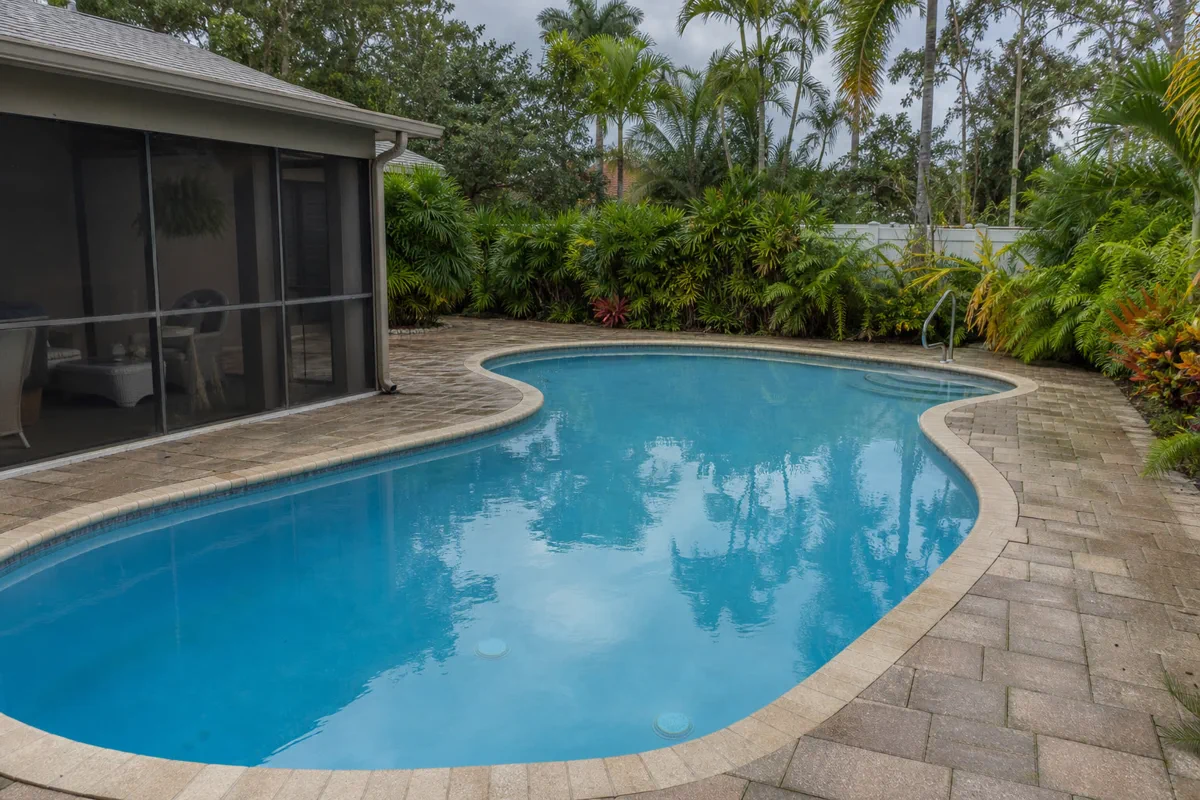
A Palm Coast pool can lose water to heat, coastal wind, splash-out, autofill settings, skimmer movement, cracked fittings, salt-air wear, or pressure-side plumbing under the deck. The useful first step is not guessing where the leak is; it is describing the water loss clearly so an experienced pool professional can review the symptoms and follow up about the right detection path.
24 hrsbucket-test notes can separate normal evaporation from a likely leak.
1 inchof daily loss is enough to justify a closer look at fittings, plumbing, and shell clues.
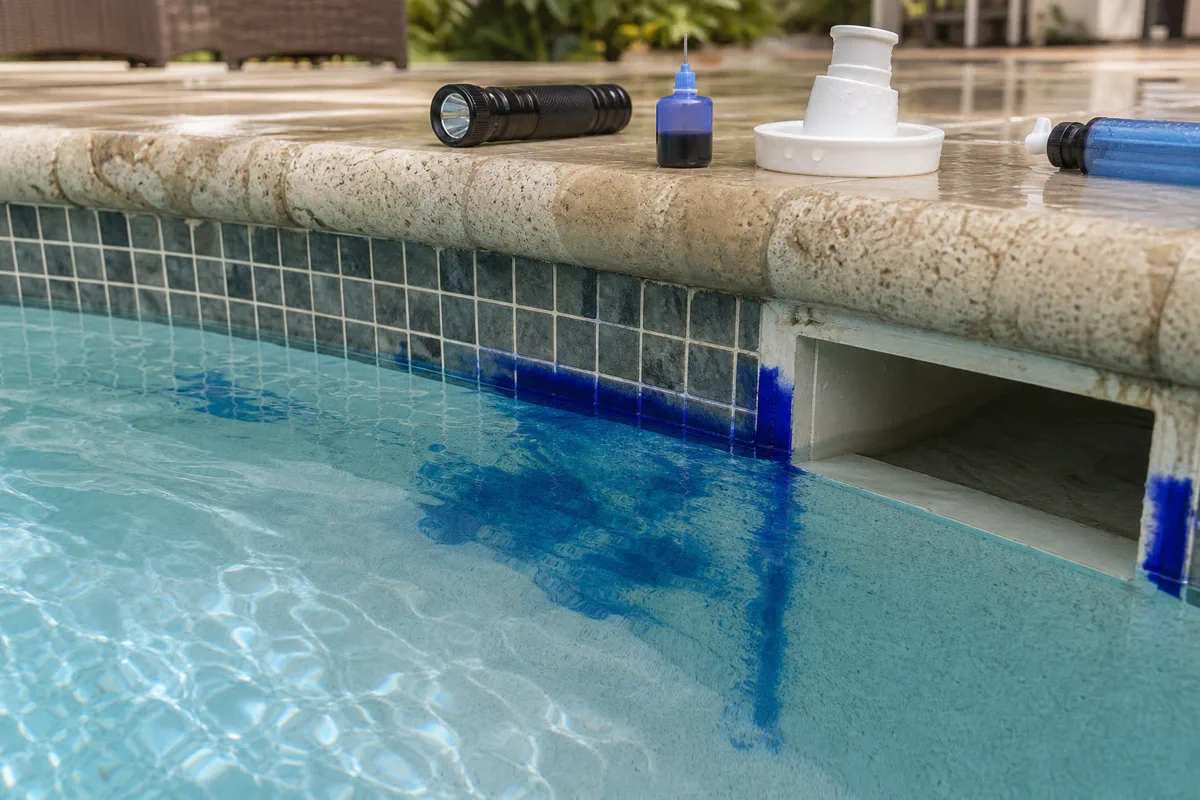
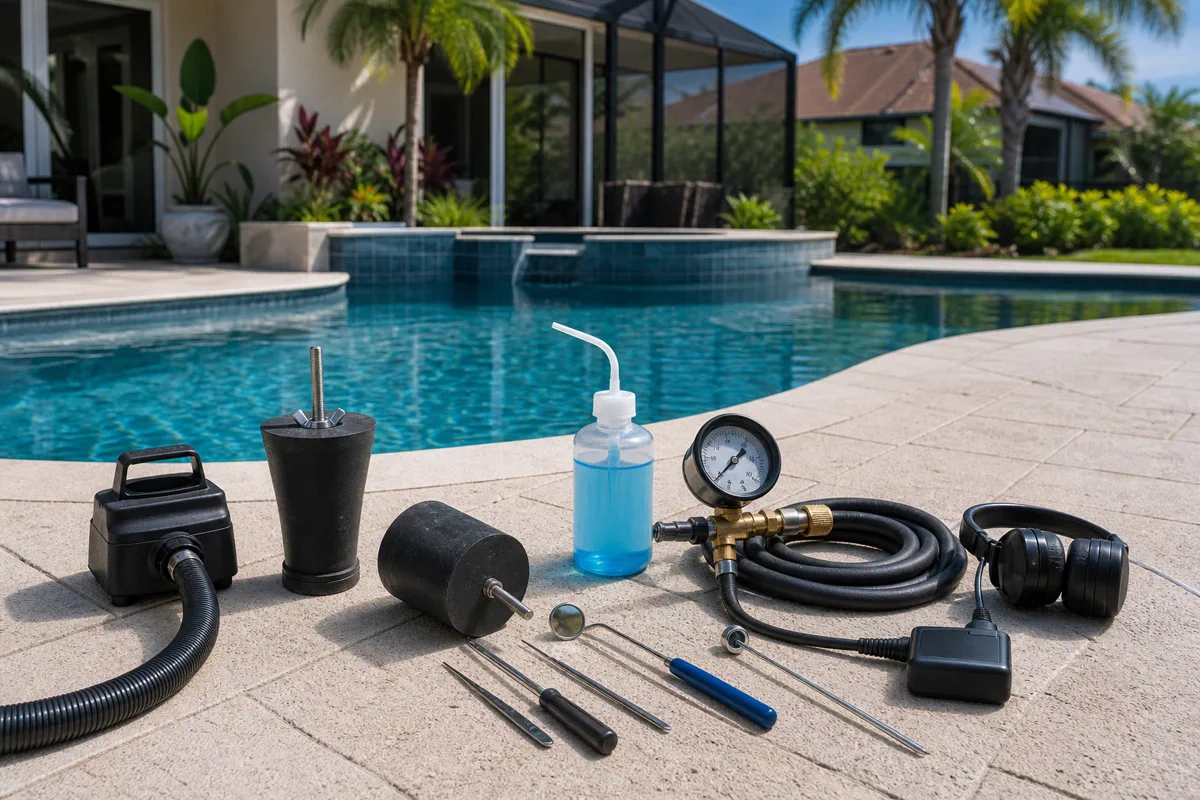
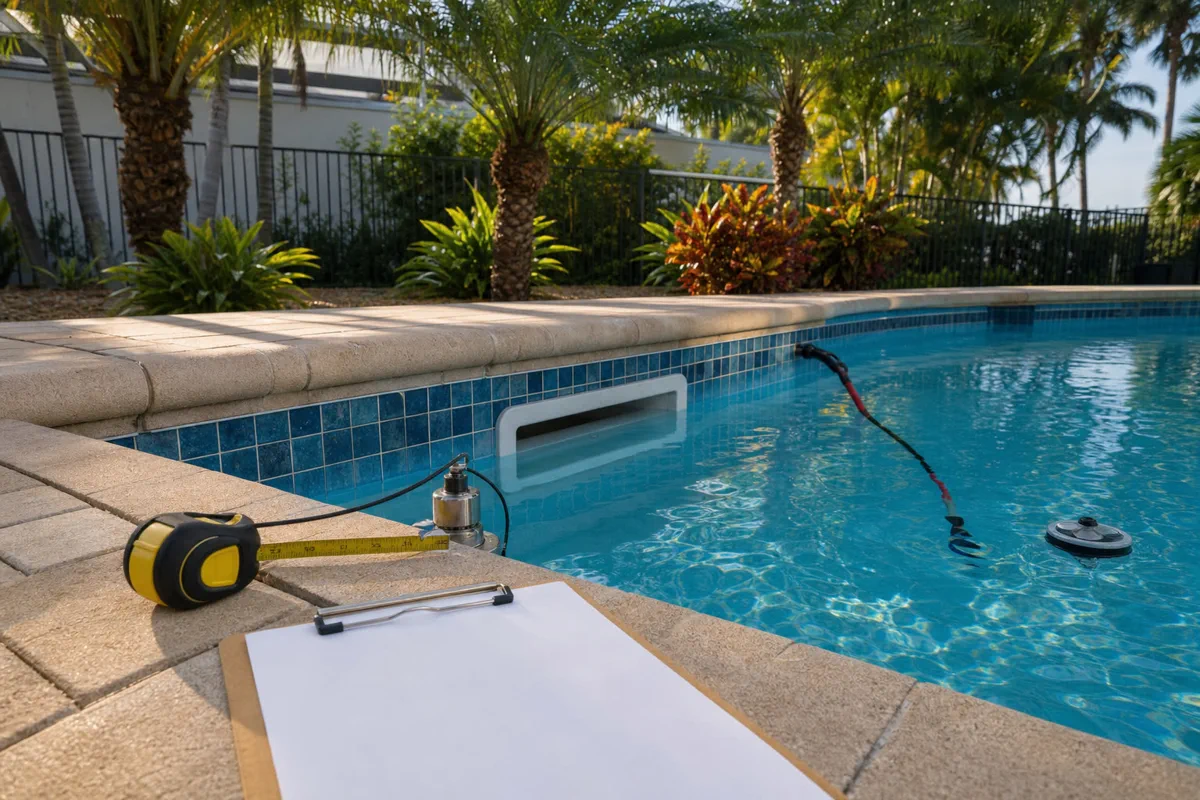
Waterline photos help compare evaporation, splash-out, and steady loss.Skimmers, returns, lights, and fittings are common dye-test locations.Pressure testing and listening equipment help narrow plumbing leaks before repair planning.
Why Palm Coast pools need careful leak diagnosis
Palm Coast pool leaks can be easy to misread because coastal wind, summer heat, afternoon storms, sandy soil, irrigation overspray, salt air, screen enclosures, pine and oak shade, and autofill devices all change the visible waterline. Homes around Seminole Woods, Indian Trails, Matanzas Woods, Hammock Dunes, Flagler Beach, Bunnell, and canal- or Intracoastal-adjacent neighborhoods often have different deck layouts, equipment-pad access, drainage swales, and pool-surface ages. Those details matter because the same symptom — water disappearing too quickly — may come from a skimmer throat, return fitting, light niche, underground pressure line, equipment-pad leak, shell movement, or a normal evaporation pattern that needs to be measured first.
A practical first conversation should pin down how fast the water drops, whether the loss changes with the pump running, whether the water stops near a fitting, whether the autofill is hiding the rate of loss, and whether there are damp areas near the pad, patio, screen enclosure footer, or side yard. Clear notes and photos make it easier for a pool professional to decide whether dye testing, pressure testing, listening equipment, shell inspection, equipment troubleshooting, or repair planning is the right next step.
Common Palm Coast leak scenarios
Many Palm Coast homeowners first notice that the pool needs water every few days, the autofill runs more than usual, or the water drops below a skimmer opening. Those clues point the review toward waterline fittings, skimmer throats, return jets, lights, tile-line movement, valves, and underground lines. If loss changes when the pump is on, a pressure-side or suction-side plumbing check may become more relevant. If the pool is screened or shaded, comparing loss against a bucket test helps avoid confusing weather with a leak.
Access planning matters too. Screen enclosures, paver decks, tight side yards, pets, gates, equipment pads, and drainage swales can affect how a detection visit is staged. A careful diagnostic path should narrow the problem area before anyone discusses cutting deck material, opening pavers, or planning a repair.
Equipment layout, patio access, gates, and screen-cage details can shape the visit.
What to share before a callback
How much water the pool loses in 24 hours, if you know it, and whether that changes with the pump on or off.
Whether the water stops dropping near a skimmer, return, light, step, tile line, or other fitting.
Photos of the waterline, skimmer, returns, light niche, equipment pad, deck cracks, wet spots, and any autofill device.
Whether the pool is saltwater, screened, coastal or canal-adjacent, recently resurfaced, or affected by nearby deck/paver work.
Access notes: gates, screen doors, pets, equipment-pad clearance, side-yard width, and where vehicles can park.
These notes do not replace professional detection. They simply make the follow-up more practical and help separate dye testing, pressure testing, listening equipment, shell inspection, equipment review, and repair-planning questions.
Helpful homeowner FAQs
How do I know if my Palm Coast pool has a leak instead of normal evaporation?
Use a bucket test or compare the pool's water loss against a marked bucket over about 24 hours. If the pool drops noticeably more than the bucket, or if the loss continues even when the pool is covered or calm, a leak is more likely. Heat and wind matter, so the result is a clue rather than a diagnosis by itself.
Can an autofill hide a pool leak?
Yes. An autofill can keep the waterline looking normal while adding water constantly. Watch for a fill line that runs often, a higher water bill, diluted chemicals, or a pool that only reveals the loss after the autofill is shut off for a controlled period.
Where do pool leaks usually start?
Common places include the skimmer throat, return fittings, light niche, main drain area, shell cracks, equipment pad, and underground plumbing lines. A professional may use dye, pressure testing, and listening equipment to work through those areas in a logical order.
Should I try to find the exact leak before requesting a callback?
No. The useful homeowner work is observing symptoms: water-loss rate, pump-on versus pump-off behavior, where the level stops, and any wet areas. Finding the exact leak is the purpose of a detection visit.
Does a leak always mean the pool shell is cracked?
No. Many leaks come from fittings, skimmer seams, plumbing, valves, equipment, or light conduits. Shell cracks are possible, but testing helps avoid assuming the most disruptive repair before easier-to-check causes are ruled in or out.
Project details that affect the plan
After testing, repair planning can focus on the confirmed area instead of guessing.coastal Northeast Florida storms, coastal humidity, paver movement, screened cages, pine needles, oak leaves, and salt-air exposure, and sun exposure all affect context.Good access notes make scheduling and diagnostic setup smoother.
Tell us what your Palm Coast pool is doing
If the pool is losing water faster than expected, share the symptoms and request a callback. You do not need to diagnose the leak before reaching out.